What the Camera Knows
Photography Culture & Reflection
On photography, presence, and the things artificial intelligence cannot feel
For a long time, photography didn't make sense to me.
I don't mean technically. I mean something harder to name — a feeling that the camera and I were working against each other. I would arrive somewhere, raise the lens, make the image, and walk away with something that looked right but felt hollow. The world I had stood inside didn't survive the translation. The photograph existed. The experience didn't.
I kept shooting. I told myself it was practice, that the gap would close. It didn't. If anything, the more images I made, the wider the distance grew between what I felt in a place and what I brought home from it.
01 · Slowness and attention
The camera asks you to stop
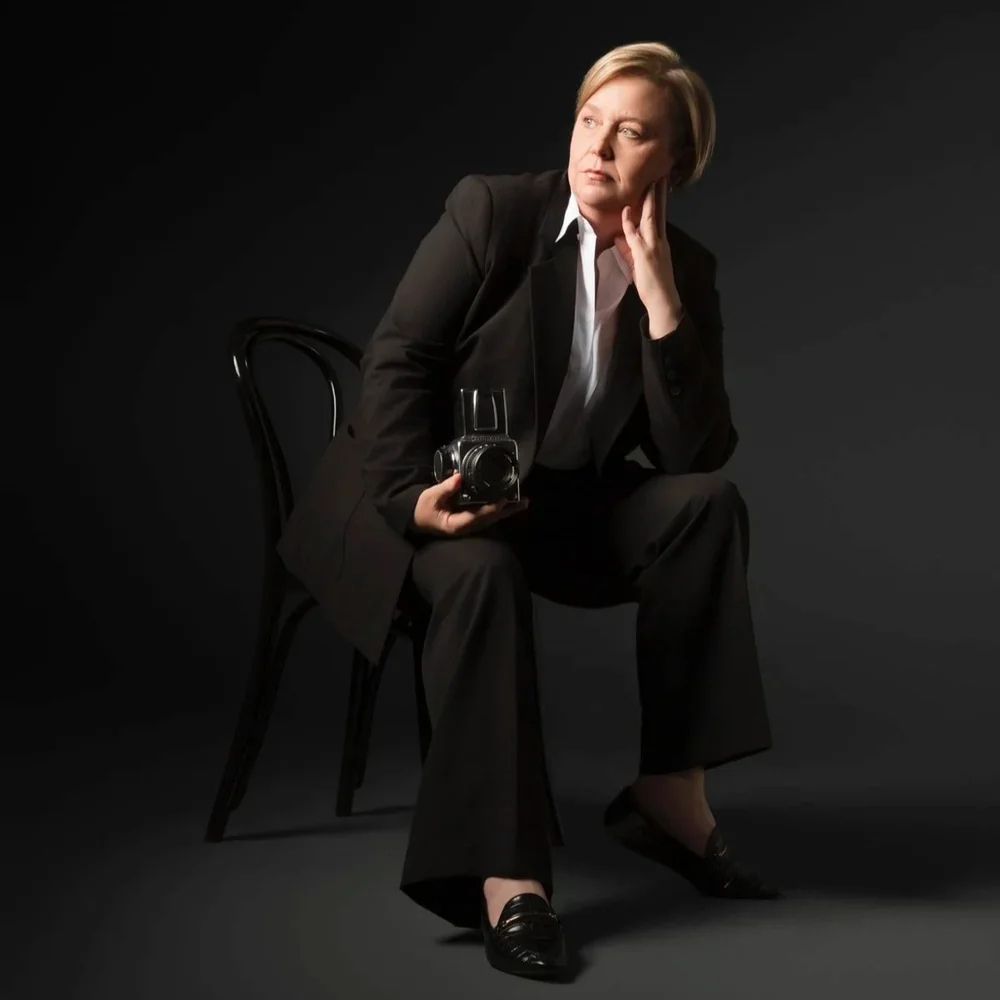
Then I picked up a Hasselblad 907X.
The first thing the Hasselblad did was slow me down. Not through inconvenience — through design. It is a camera that does not reward urgency. It asks you to stop before you shoot. To read the light not with software but with your own eyes. To commit to a frame before you know whether it worked. There is no burst mode for the anxious mind, no instant reassurance on a screen, no algorithm quietly nudging you toward what has already proven popular.
There is only what is in front of you and the decision you make about it.
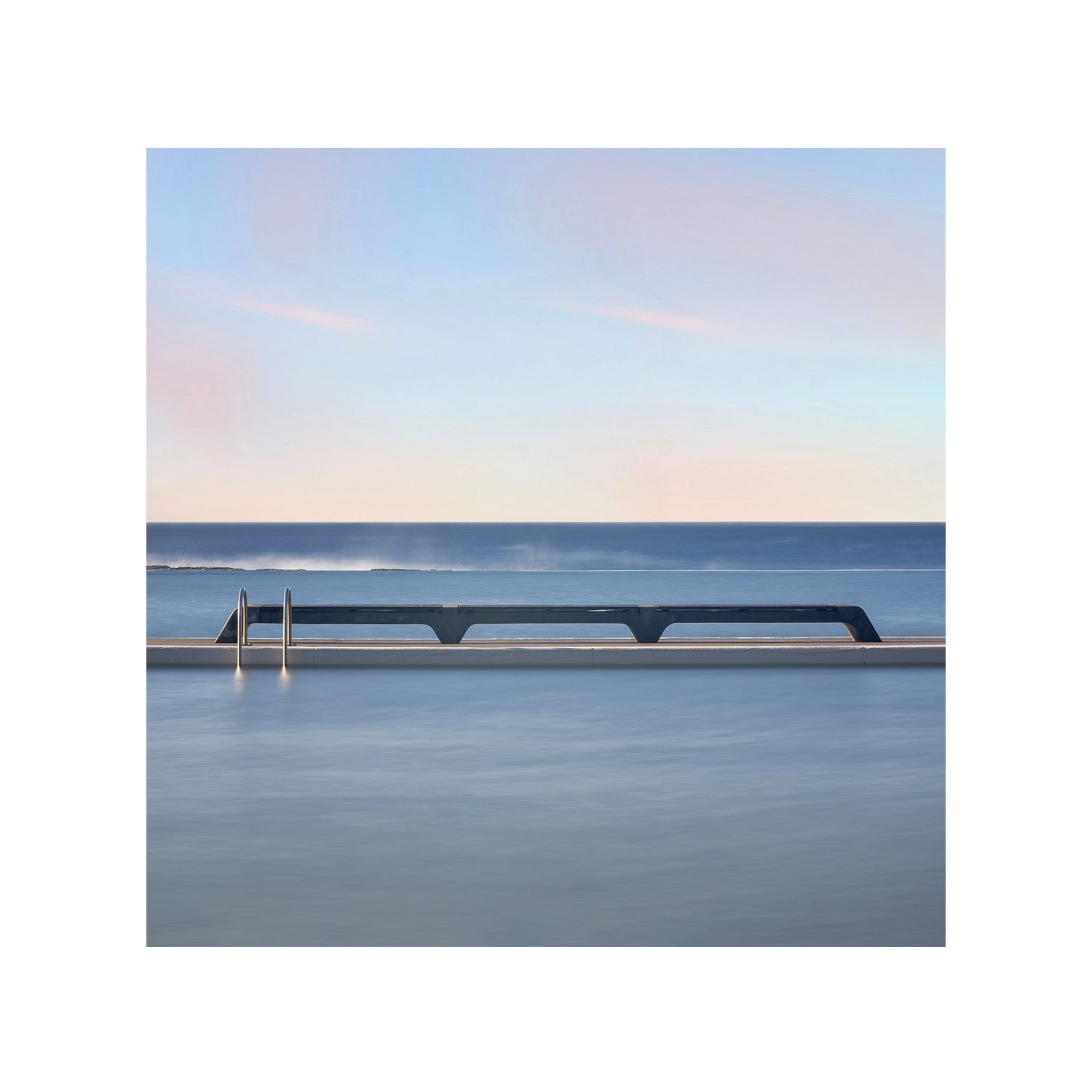
The first landscape I made with it was nothing spectacular by conventional measure. Overcast sky. Flat, diffused light. The kind of conditions most photographers wait out or drive away from. But the Hasselblad didn't care about that hierarchy. It was simply present. And standing behind it, for the first time in years, so was I.
Something in the slowness opened a door. The light wasn't golden. The scene wasn't dramatic. But it was real — textured, specific, quietly alive in a way that I had been moving too fast to notice. When I finally looked at what I had made, it was the first photograph I had taken in a long time that felt like it came from somewhere true.
Photography had started to make sense.
02 · The act of recording
Sontag and the cost of looking
Susan Sontag published On Photography in 1977, and nearly fifty years later it remains one of the most uncomfortable books a photographer can read. Not because it is wrong, but because it is honest in ways we prefer to avoid.
Sontag was interested in what cameras do to the way people see — not just what they record, but what the act of recording costs us. She understood that a camera offers something seductive and slightly dangerous: the feeling of being present in a moment while simultaneously stepping outside it. You are there, and you are also already turning the moment into something you can keep. Those two things are not the same. Sometimes they are opposites.
She asked a question photographers still resist: does the camera bring us closer to experience, or does it give us a sophisticated way of avoiding it?
I spent years proving her right without knowing it. Arriving at places with my eye already behind a lens. Leaving with images but not memories. Collecting proof that I had been somewhere rather than allowing myself to actually be there.

Read the source
On Photography
The Penguin Modern Classics edition can be ordered through Australian booksellers. Follow the links below to check current pricing and availability.
03 · Image culture
The acceleration
What Sontag couldn't have predicted was the acceleration. The smartphone didn't create the hunger for images she described — it simply fed it at a scale she couldn't have imagined. We now live inside a continuous stream of photographs that no one was meant to linger over, made by people who were rarely fully present when they made them. Images arrive, provoke a small flicker of feeling, and vanish. We see more than any generation before us. It is not clear we look at anything more deeply.
And now, into all of this, comes artificial intelligence.
I want to be careful here, because the conversation around AI and photography is often conducted in bad faith — either as panic or as evangelism, neither of which is especially useful.
AI-generated images are extraordinary things. They can be beautiful, convincing, technically flawless and emotionally resonant. They can conjure landscapes no camera has ever pointed at and portraits of people who have never existed. They are getting better with a speed that should give anyone in the image-making world reason to pay attention.
04 · Evidence of presence
Photograph or image
But they are not photography.
This isn't gatekeeping. It isn't nostalgia, or professional anxiety, or a failure to embrace the new. It is something simpler. A photograph, at its core, is the record of a relationship between a person and a moment in the real world. It carries within it the decision to go somewhere, to stand in a particular light, to wait, to see, to feel something and attempt to translate it. Even a bad photograph carries evidence of presence. Someone was there.
A photograph, at its core, is the record of a relationship between a person and a moment in the real world.
An AI image carries no such evidence. It carries pattern, probability, and the aggregated aesthetic choices of every image it was trained on. It can produce something that looks like a photograph the way a very good forgery looks like a painting. The surface is convincing. The origin is entirely different.
Standing behind the Hasselblad in flat grey light, waiting for something in the scene to reveal itself, I was doing something an algorithm cannot do. I was allowing the world to affect me. I was cold, or still, or uncertain. I was making choices under conditions I hadn't chosen. I was present in a way that left a mark — not just on the sensor, but on me.
That residue matters. It is what separates a photograph from an image. And it is what Sontag, for all her scepticism, understood photography could be at its best: not possession, but encounter. Not evidence that you were somewhere, but proof that somewhere got inside you.
05 · Photography and truth
The visual contract
The danger of AI isn't that it will replace photographers. It's more subtle than that.
The danger is that it accelerates something already underway — a confusion between images and experience, between looking and seeing, between the feeling a photograph produces and the feeling that produced the photograph. If we can generate any image we want, at any time, without standing anywhere or feeling anything, then what exactly are we preserving when we talk about photography's relationship with truth?
Sontag argued that photographs carry authority because they appear to say: this happened, this existed, I was there. That authority is already fracturing. Deepfakes, heavy manipulation, AI generation — the visual contract between photograph and viewer that held for a hundred and fifty years is coming apart. We now encounter images knowing we cannot fully trust them, yet we continue to be moved by them, persuaded by them, shaped by them. We believe them less and consume them more.
The response to this isn't to abandon photography. It's to understand more clearly what photography actually is — and what makes it irreplaceable.
The human part · Standing inside the moment

06 · The human decision
What the camera knows
The Hasselblad taught me this without ever explaining it.
It taught me by insisting I slow down. By removing the shortcuts that let me avoid genuine attention. By making me stand in overcast light on an unremarkable morning and notice what was actually there rather than what I had hoped to find.
Sontag worried that cameras teach us to mistake looking for knowing. The right camera, used with the right intention, can do the opposite. It can teach us that knowing requires presence — that real seeing is slow, uncertain, physical, and resistant to being automated.
An AI can be prompted to generate a misty landscape at dawn. It can produce something technically beautiful, correctly exposed, aesthetically coherent. What it cannot do is stand in the cold and wait. It cannot feel the light change. It cannot decide, in the particular silence of an early morning, that this moment — not five minutes earlier, not five minutes later — is the one worth keeping.
That decision is not technical. It is human. It is the part of photography that no model will be trained to replicate, because it doesn't live in the image. It lives in the person who made it.
What Susan Sontag was really asking, underneath all the theory, was a simple and serious question: what are you doing when you raise the camera?
Are you collecting? Consuming? Performing? Avoiding? Or are you — in the best version of this — paying attention? Translating something real into something that might allow another person to feel it too?
The answer changes everything about the photograph.
I still carry the Hasselblad to places that don't promise drama. Flat light, grey sky, the kind of morning that looks like nothing on a phone screen. I stand still for longer than feels comfortable. I wait for the scene to say something rather than telling it what to be.
The images I make this way are quieter than most of what moves through the world now. They will never trend. They are not optimised for attention. They carry the particular texture of a real place at a real moment, made by someone who was actually there.
In an age of infinite generated images, that feels like enough.
It feels, in fact, like everything.
References
Sontag, S. (1977) On Photography. New York: Farrar, Straus and Giroux.
Sontag, S. (2003) Regarding the Pain of Others. New York: Farrar, Straus and Giroux.
Continue the conversation
Notes on photography
Reflections, field notes and practical photography insights from behind the lens.