Beyond the Panorama: What Working Alongside Ken Duncan Really Taught Me About Photography
Personal reflection
The first time I saw Ken Duncan's work, I was a child standing in my family home, looking at a photograph on the wall.
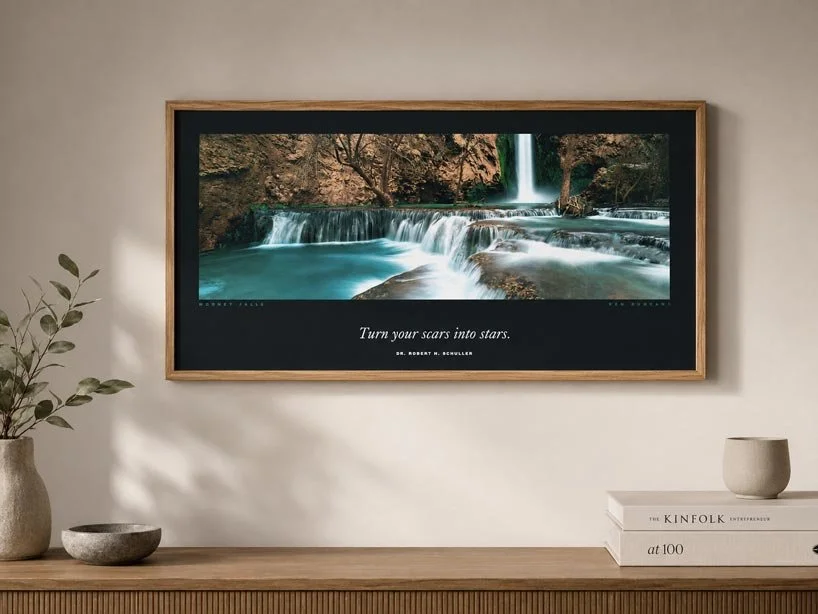
Mooney Falls, Arizona. Water falling through canyon walls the colour of warm earth, caught in light that felt less like afternoon sun than like something older. Beneath the image, a line of text I couldn't fully understand: Turn your scars into stars. I didn't need to understand it. I only knew it reached somewhere inside me that most things didn't.
Long before photography became my career, before I had words for what a panoramic frame could hold, that print had already begun shaping something. It showed me a landscape could carry emotion — that beauty and pain could share the same breath, that a place you'd never visited could feel deeply personal.
Years later, I found myself standing in front of the person who made it.
Practice overview
A personal reflection on working alongside Ken Duncan — from film transparencies and test prints to influence, responsibility and the slower work of finding an authentic photographic voice.
01 · Gallery and print
Inside the gallery
The intimidation wasn't about Ken himself. He's warm, direct, funny in ways that catch you off guard. It was more that admiration has a way of enlarging people beyond their actual dimensions. When someone's work has hung on your childhood wall, they become part of your understanding of what art can be. To then stand in front of that person — aware of your own uncertainty, your unfinished voice, your fragile and unspoken ambitions — is a quietly vertiginous thing.
I spent those early weeks noticing everything. The scale of the prints. The way light fell across gallery walls. The conversations between Ken and Pam and the collectors who moved slowly through the space, stopping, stepping closer, stepping back. People see the finished image — the sweep of a panorama, the gold pressing through cloud, the stillness of a print glowing under gallery lights. What they don't see is where it begins.
It begins with a folder of film transparencies.
Ken would place them down on the lightbox and talk — stories tumbling out of each frame, the circumstances of the shot, what the weather was doing, what he'd waited for. Part of my job was to photograph those transparencies and build the high-resolution panoramic raw files, from which would go to Ken for editing, in which prints would eventually be made. I felt the weight of that responsibility every time. I wanted to do Ken's image justice. And I learned quickly — take your time in the beginning and it saves you time in the end.
Every dust spot I missed in the preperation stage became a problem later.
Then came the test prints. I loved this part even when it humbled me. We'd stand in front of a print and Ken would study it, talking quietly about light, about what was missing, about what the image still needed to say. Once, early on, he looked at a print for a long moment and said to me: You need to turn the lights on.
Then he walked away smiling.
I had no idea what he meant. No formula. No explanation. He'd go to the print lab and say the same thing to the printer who had been working with him for twenty years. Ten minutes later she'd emerge with a test print and he'd nod. Approved. I learned a great deal about printing watching that process. But I still don't know what "turn the lights on" means. Not in words. There is no formula. There is only a feeling — and you either have it or you're still developing it.
The first real lesson: Ken's success was not luck. It was a discipline so sustained it had become indistinguishable from character. Watching Ken and Pam work together made that clearest.
From the outside, people see the photographer's name first. Inside the business, it was impossible not to recognise how much of that world was defined by partnership. Pam brought an instinctive understanding of people and presentation — she knew how to make the work feel considered, cared for, personal. Not merely photographs on a wall, but objects entering someone's life. Their collaboration was creative, practical, emotional, and exacting all at once.
There were framed prints leaning against walls late at night, conversations continuing long after the doors had closed, decisions being made that visitors would never consciously notice but would somehow feel.
That was one of the quiet revelations of working inside a fine art photography gallery. Presentation is not separate from the work. It is part of the work.
Presentation is not separate from the work. It is part of the work.
A photograph doesn't end when the shutter falls. It continues through the edit, the print, the paper, the frame, the wall, the light, the story — and finally the person standing in front of it. I had loved photographs before, but working there taught me how people live with them. I watched collectors hesitate before certain images, return to the same frame again and again, recognise something in it they hadn't expected to find.
Ken often said there was no greater honour for a photographer than someone choosing to place your work on their walls. I still think about that each time I prepare a print of my own.
02 · Responsibility and return
What photography can give back
The work extended far beyond the gallery walls. I understood that most clearly the day Ken took me to Haasts Bluff in the Northern Territory.
This wasn't a photography trip in any conventional sense. What Ken was doing out there — through Walk A While and his long relationship with the community — was something harder to photograph and more important than any landscape. He was showing up. Using his platform not to extract images from a place but to put something back into it. Education, skills, hope. A tangible way forward for people in one of Australia's most remote communities. I felt a great sense of pride being out there, seeing Ken's work with the community and being welcomed in.
My role one of the day's was to take some of the young girls out with cameras for the first time and teach them the basics of photography. How to hold the camera. How to find a composition. When to press the shutter. Simple things that had once been handed to me the same way.
What happened next I wasn't prepared for.
One of the elder's granddaughters — curious, fearless, reminded me of myself at that age — climbed up onto the roof rack of the LandCruiser to see what the world looked like from up there. She wanted the higher angle because we talked about why I loved aerials. She wanted to see differently. Through the viewfinder, then away from it, then after the moment she took the photo, she looked at what she'd made — that expression. That OMG, yes, you took that. I've never forgotten it.
We went back to the centre and edited their work together. Each girl chose a favourite. I printed them two copies, asked them to sign their names on the photograph, one was to take home — something tangible, something they could hold and the other was for the Ikunji Creative Technology Centre.
The next morning they came back and saw their signed prints hanging on the wall. They left in a hurry, i was well… confused, not quite understanding what happened. Ten minutes later they returned — with their friends, their family, anyone they could find. Over the following days, streams of people came through to look at what those girls had created.
I have never felt so proud of anything.
That day reframed something I thought I understood about photography. Ken's relationship with Haasts Bluff wasn't about the images he made there. It was about what photography could do in someone else's hands. The reach his work had built across decades was being used to give a remote community a way to see themselves and their world differently. That is a rare and serious use of influence. He was doing what so many don't even think about, he was giving back.
03 · Influence and independence
Influence and independence
There was something I found difficult to admit during those initial years working with Ken.
I never wanted to become a version of Ken Duncan.
It may sound strange given how deeply I respected him and admire his work — but that respect was precisely why it mattered. His visual language was distinctive, immediately recognisable. His association with panoramic landscape photography ran so deep that for a long time I avoided working in that format altogether. Not out of embarrassment. Out of something closer to reverence. I didn't want people to look at my work and see an imitation of someone I admired and that had mentored me.
I wanted to earn my own relationship with the landscape.
So I kept my personal photographs mostly to myself. I was still trying to work out who I was, and I didn't yet feel secure enough to place my own voice in front of someone whose work had formed me so profoundly. Show too early, before you know what's yours, and you might begin bending toward another person's vision without realising.
Influence can be a gift and a shadow at once. Creative independence isn't born from rejecting what shaped you. It comes from absorbing it, questioning it, honouring it — and eventually allowing it to become something only you could make.
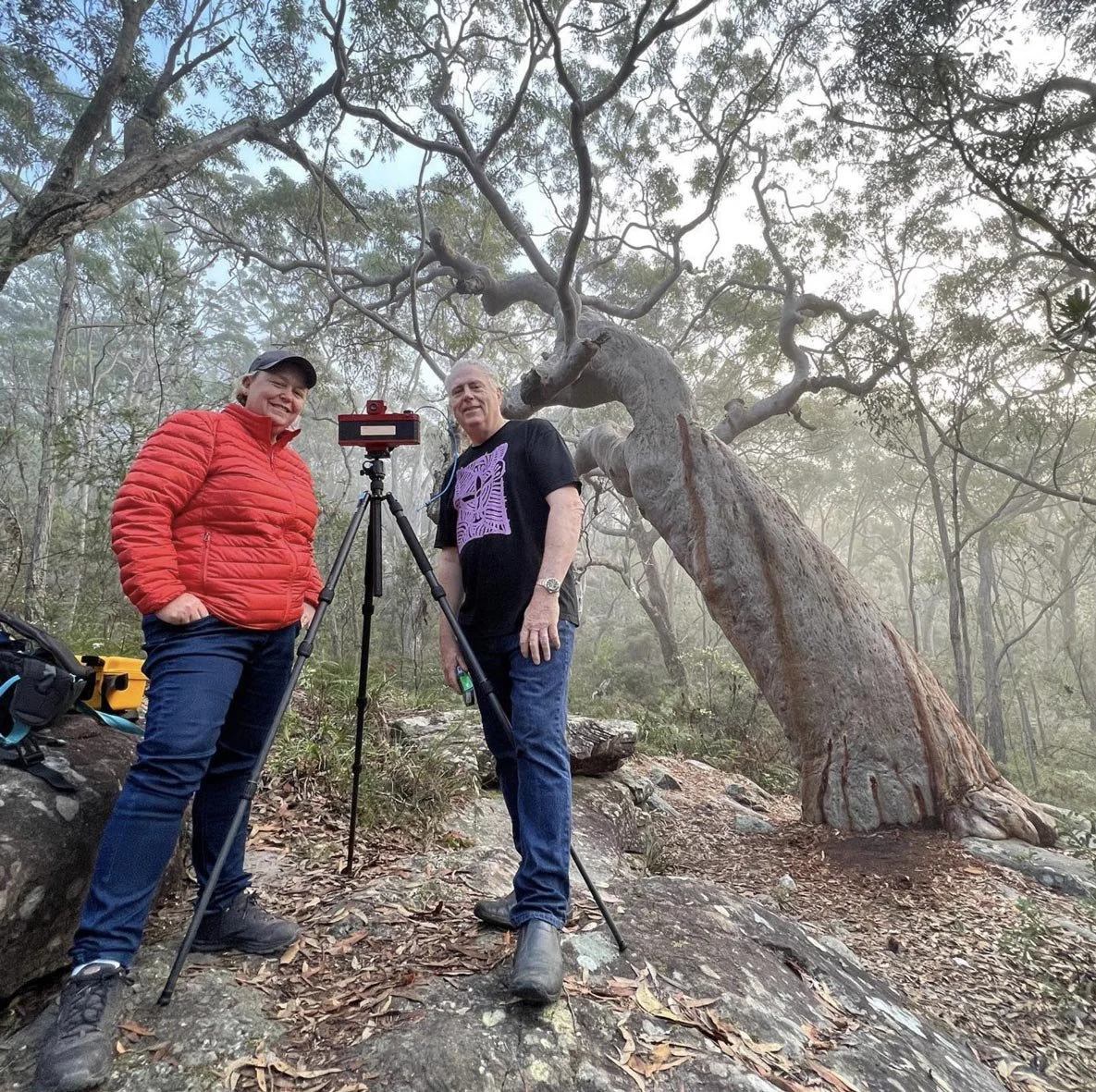
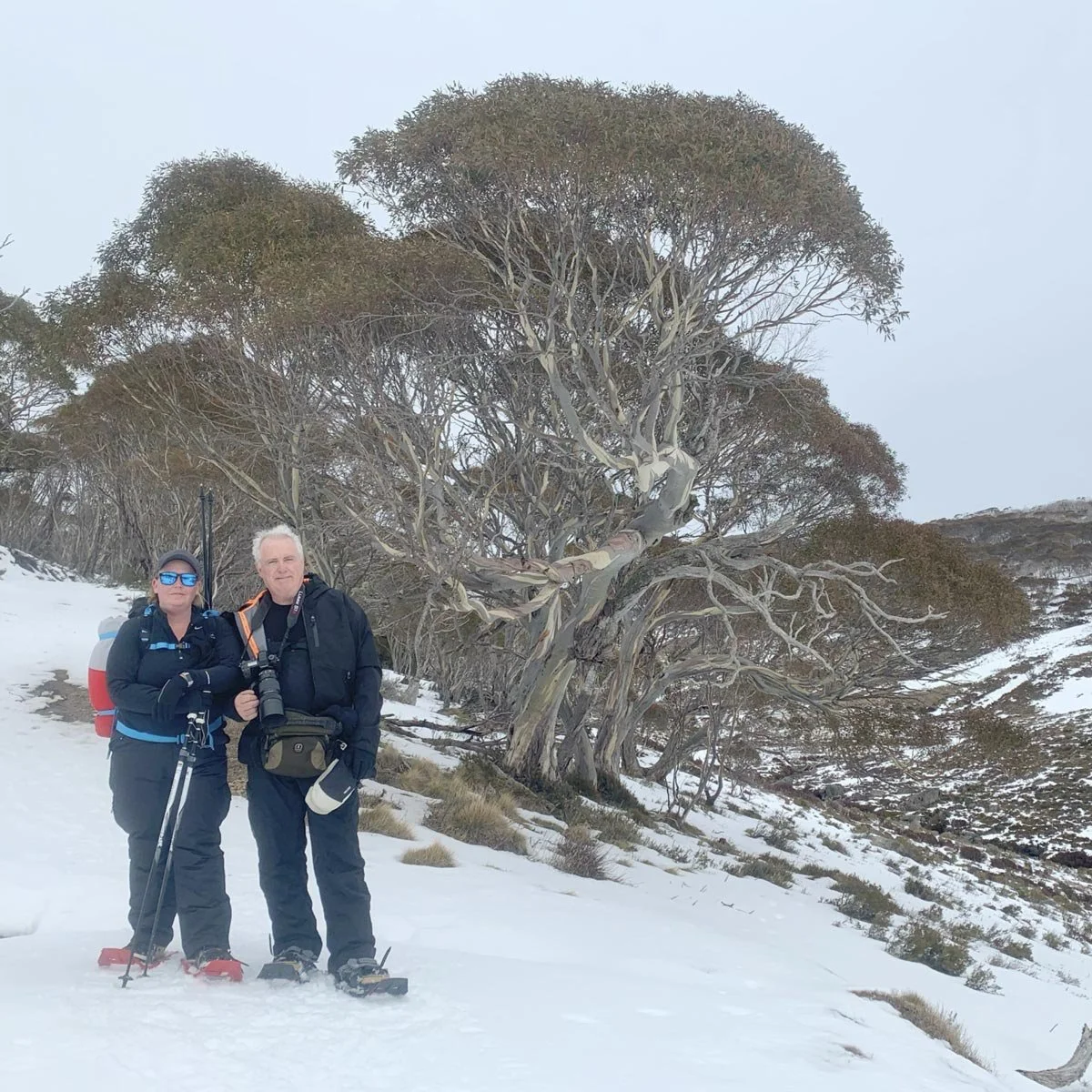
From the archive · Working alongside Ken Duncan
04 · Film and instinct
Learning the Hoff
Part of learning to see the way Ken saw meant learning to shoot the way he shot. I asked one day if he could teach me film on the Linhof Technorama 617 — the Hoff, as we called it. The camera behind his most iconic panoramic images. Heavy, mechanical, unforgiving. No autofocus, no screen to review what you'd just made, no histogram to tell you whether the exposure was right. Just a handheld light meter, a viewfinder that gave you a rough approximation of your frame, and whatever judgement you'd developed.
The first time I shot with it, I understood immediately why those images had the weight they did. There was no shortcut available. You read the light with a meter, committed to your composition through a small imprecise window, trusted yourself, and pressed the shutter. The Hoff demanded a kind of photography that modern equipment has made almost obsolete — pure attention, no safety net.
Just the two of us. Him teaching, me trying to understand. He'd look through the frame, read the light with the meter, make a decision I couldn't quite follow, and press the shutter.
I asked him a lot of questions, why did you do that, why do I need to take 3 shots, how did you come up with that exposure time. It wasnt the reading on the light metre… He couldn't fully explain it. Not because the knowledge wasn't there, but because after decades of shooting film — of committing to a frame with no screen, no instant confirmation, nothing but light and instinct — the decision had gone somewhere below language. He wasn't withholding.
He simply couldn't hand it to me the way I wanted it handed. It had to be earned through the camera itself.
At the time I found that frustrating. I wanted photography to be something I could decode and write down. I wanted to learn film, but now I understand what those afternoons were really teaching me. Film doesn't forgive impatience. The Hoff demanded you slow down, read carefully, trust yourself, and commit. There was no going back to check. No safety net. Just the weight of the camera, the needle on the light meter, and whatever you'd developed in yourself.
Somewhere in that process — between what Ken could say and what he simply knew — that's where the real education was happening. I understood this more later.
Behind every creative career is a version of this story that doesn't appear in any portfolio. The risk, the late decisions, the financial exposure, the sheer endurance required once passion becomes a life. Watching Ken and Pam carry the weight of theirs together made all of that visible. And alongside the weight — perhaps what would surprise people most about Ken — there was a great deal of laughter. A mischievous instinct for comedy beneath the iconic landscapes and the public reputation.
Humour kept the work human. I earnt a few nicknames over the time, but depth gauge and deckchair stuck…
05 · Finding a voice
Finding a voice of my own
My own photographs now live in a different register. Where Ken's images embrace grandeur — the sweep of the frame, the drama of scale — I find myself drawn toward atmosphere, solitude, stillness. Mist moving through trees. Silence settling over water. Soft light dissolving the edges of things. Landscapes suspended between memory and the present moment.
For a long time I thought that difference was something I had to prove. Now it feels like natural consequence. Ken's work gave me a framework — a standard for landscape, print, story, discipline. My own work has led me somewhere else. That's not a contradiction. That's how it's supposed to go.
Looking back, I don't see those years simply as working for a photographer. There were long conversations, shared exhaustion, genuine laughter, high expectations, and the complicated process of locating my own identity inside someone else's world.
I think about a girl standing on the roof rack of a LandCruiser in the Northern Territory, seeing what the world looks like from up there. I think about Ken standing in front of a test print, nodding quietly, and me still not knowing why that one worked when the last one didn't.
I still don't know what "turn the lights on" means. Maybe I never will…. But I'm getting closer.
Perhaps one day, when I have a body of work that feels entirely and undeniably mine, I'll sit down and show Ken the portfolio I never quite showed during those years.
Not for praise. Not for validation. But because I finally understand why finding my own voice mattered so much.
And I think he would understand that completely.