How to Buy a Fine Art Photography Print
Collecting & Buying Art
How to recognise quality, choose scale and bring a photographic work into your home.
Not all prints are created equal. If you've ever stood in a gallery admiring a large landscape photograph and wondered what actually makes it worth what it costs — or scrolled past affordable prints online and felt uncertain about whether they'd look the same on your wall — this guide is for you.
I've been making fine art prints of Australian landscapes for over a decade. I hear the same questions from buyers every time: What does archival quality actually mean? How do I choose the right size? Should I buy framed or unframed? Is a limited edition really worth more? These are exactly the right questions. The answers will help you buy something you'll love for decades — not something you'll regret within a year.
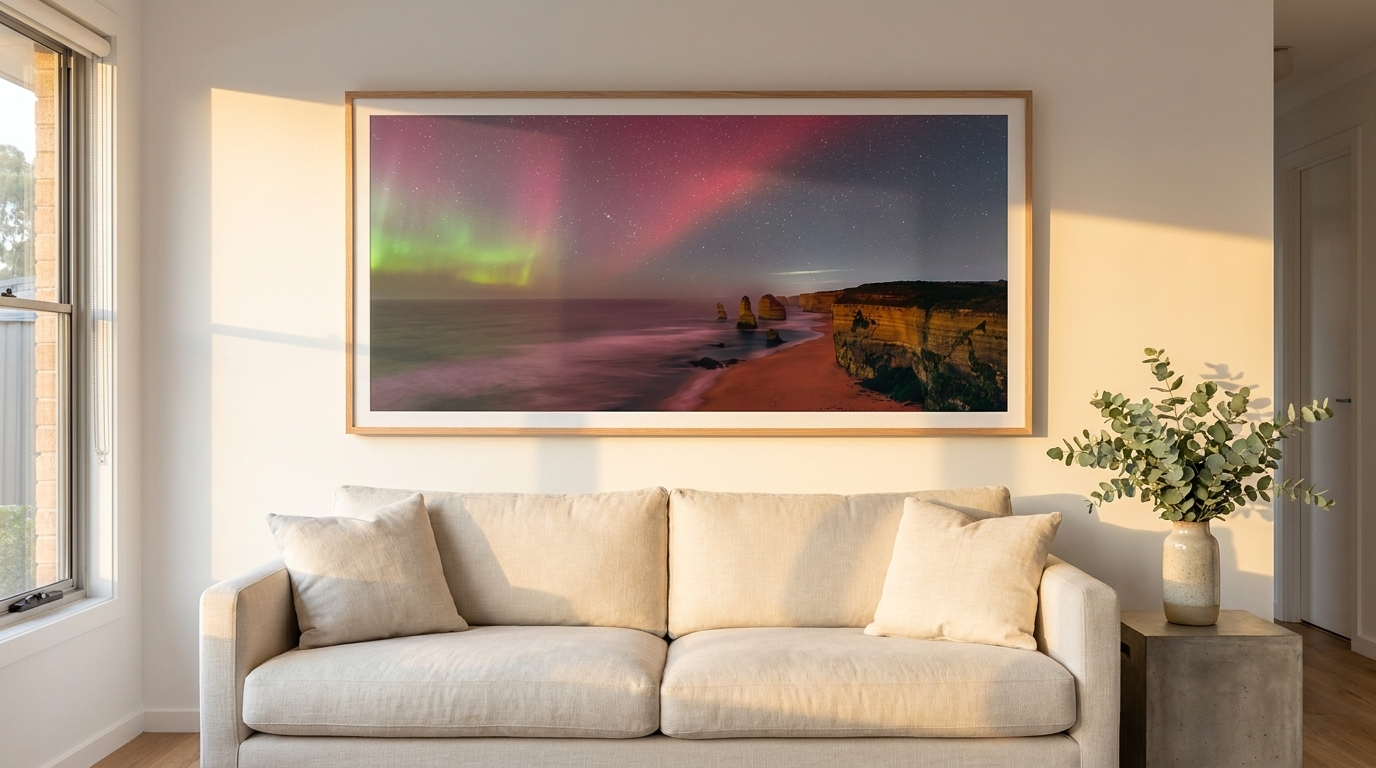
01 · Materials and process
What Makes a Fine Art Print Different
Walk into any homewares store and you'll find photographic prints for $30. Walk into a gallery and you'll find similar-looking images for $3,000. The difference isn't just the artist's name — it's fundamentally about how the print was made.
A fine art photography print is produced using a process called giclée (pronounced zhee-clay, from the French word for "spray"). Unlike standard inkjet or laser printing, giclée uses pigment-based inks — typically ten to twelve separate ink colours — sprayed at extremely high resolution onto acid-free, archival-quality paper. The result is tonal depth, colour accuracy, and fine detail that ordinary printing cannot replicate.
The paper matters just as much as the ink. Archival fine art papers are made from 100% cotton rag, not wood pulp. They're pH neutral and acid-free, which means they won't yellow, become brittle, or deteriorate over time. A high-street print on standard photographic paper may begin to shift colour within ten to twenty years. A properly produced giclée print on cotton rag paper, stored and displayed correctly, can last upwards of 200 years.
I print my own work exclusively on certified archival papers with pigment-based inks. It's not a marketing claim — it's the only way I'm prepared to put my name on something and hand it to a collector.
02 · Longevity
What "Archival Quality" Actually Means
You'll see this phrase on a lot of product pages. It's worth understanding what it refers to, because not everyone uses the term consistently.
Archival quality describes materials and processes designed to remain stable over a very long time — in the fine art world, typically defined as 75 years or more without significant colour shift or physical deterioration. For a print, this requires three things working together: pigment inks rather than dye-based inks, acid-free paper, and UV-protective glazing if the work is framed.
Pigment inks are the standard. Dye-based inks produce vivid colours initially but are chemically unstable — the molecules break down under UV exposure and humidity. Pigment inks are physically more stable and far more resistant to fading. If a printer or artist can't tell you specifically that their prints use pigment-based inks, that's worth asking about before you buy.
Cotton rag papers don't contain the lignin that causes wood-pulp paper to yellow and turn acidic over time. When you see "cotton rag" or "100% cotton" on a paper specification, that's a reliable indicator of quality.
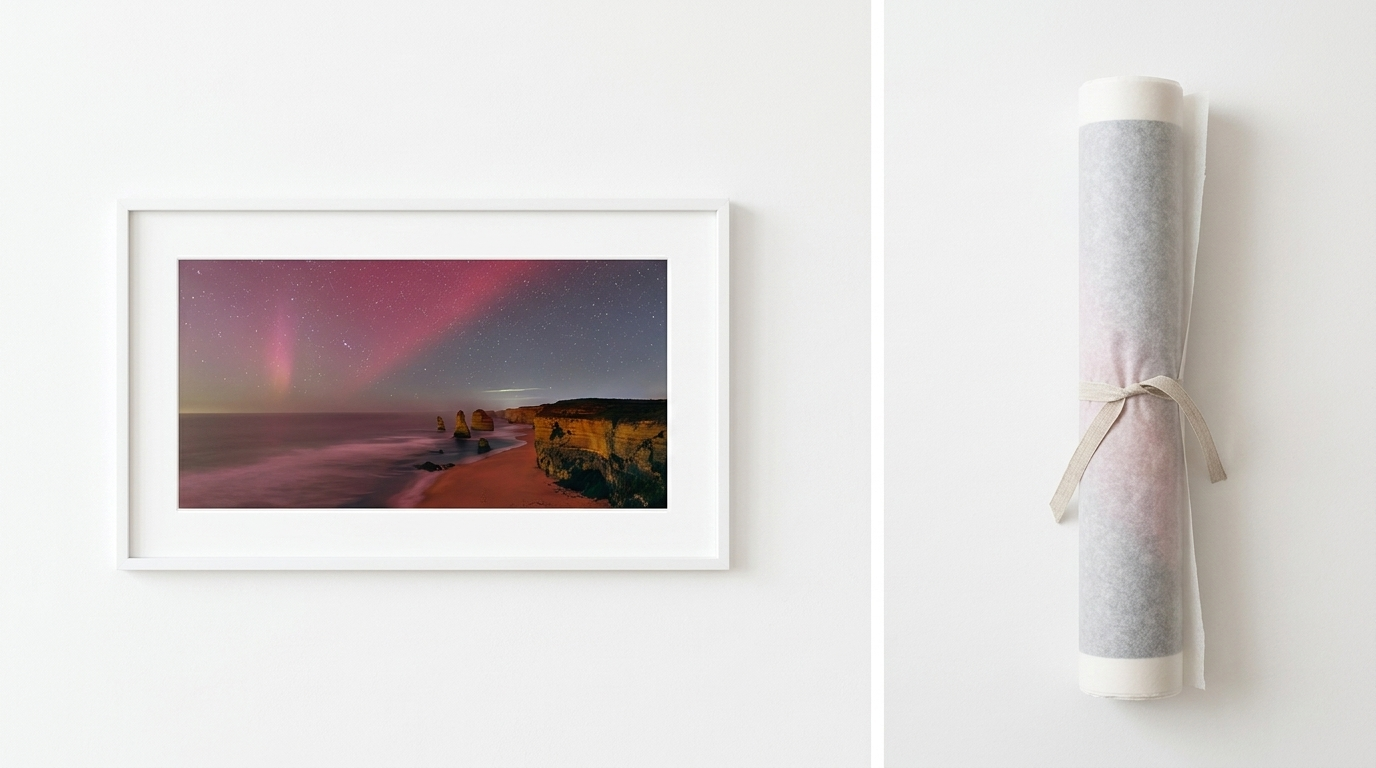
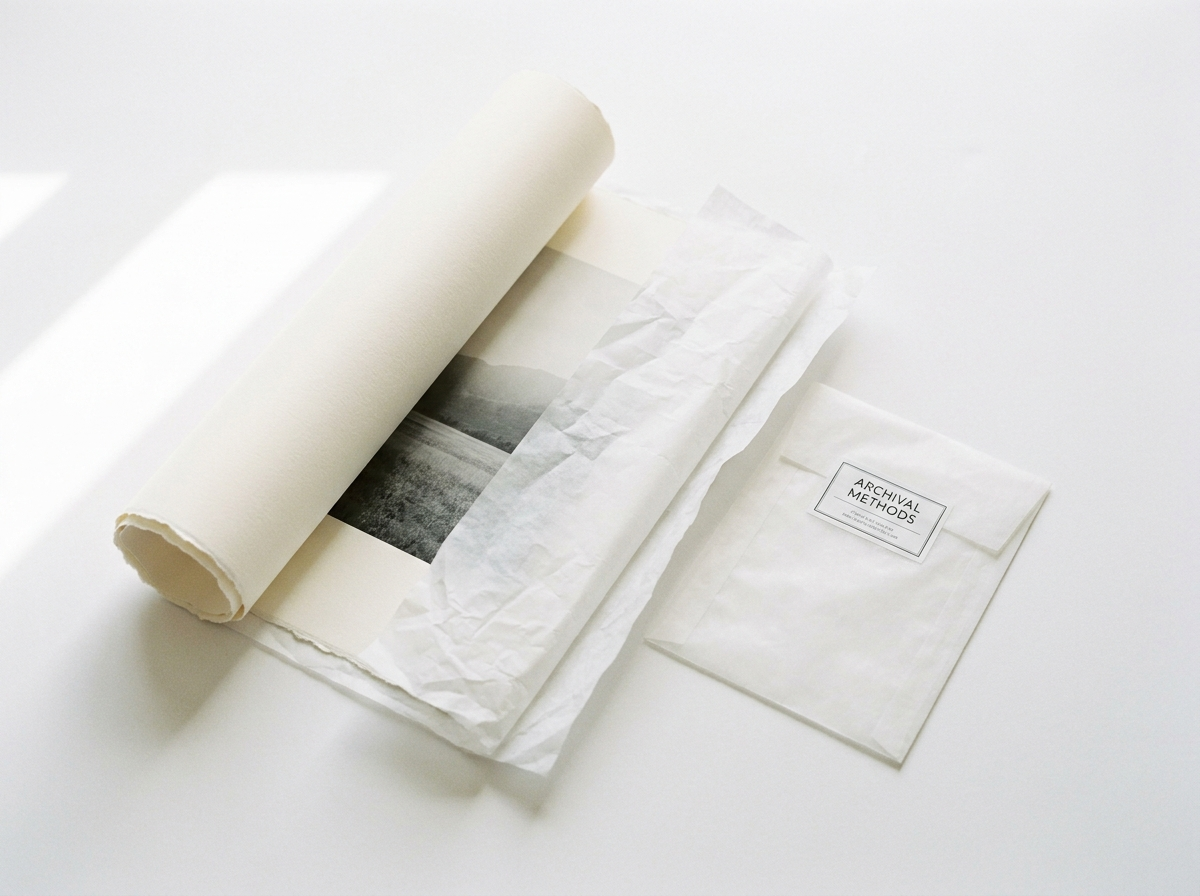
If you're buying unframed, store your print flat, in a cool dry place, away from direct light — ideally interleaved with acid-free tissue. If you're framing it yourself, ask your framer specifically for UV-protective glass and an acid-free mat. It's a small additional cost that will protect the work for generations.
Made to last
03 · Edition and provenance
Limited Editions: What the Numbers Mean
You'll often see fine art prints described as "1/25" or "Edition of 50." This notation means the print is one of a defined and finite number of copies that will ever be made from that image at that size.
For a print marked "7/25," the 25 is the total edition size — the artist has committed to producing no more than 25 prints of this image at this size, ever. The 7 means this particular print was the seventh produced. Lower numbers don't affect quality; they're simply a record of production order.
What a limited edition protects is scarcity — and scarcity affects value. An open edition has no ceiling on supply, so the market can never attribute meaningful collectible value to any individual print. A limited edition creates genuine rarity. When the edition sells out, it's gone permanently.
To verify an edition is genuine, look for two things: the artist's original signature on the print itself — not a printed facsimile — and a Certificate of Authenticity that includes the title, edition number, paper and ink specifications, and the artist's signature. This certificate is your provenance. It's what you'd show a future buyer, an estate, or an insurer.
My prints are all produced in strictly limited editions. Once an edition closes, I retire the image from sale permanently. The certificate accompanying every print details everything a collector needs to know.
When the edition sells out, it's gone permanently.
04 · Scale and placement
Choosing the Right Size
This is where most first-time buyers hesitate — and almost always in the direction of going too small.
The rule interior designers use is that wall art should fill roughly two-thirds to three-quarters of the available wall space behind a piece of furniture. If your sofa is 220cm wide, you're looking for artwork that spans around 145 to 165cm — whether that's a single large work or a considered grouping.
As a general guide: small prints (30 × 40cm to 40 × 60cm) suit hallways, bathrooms, studies, or gallery walls, but can feel underwhelming alone in a large living room. Medium prints (60 × 90cm to 80 × 120cm) are versatile — this is the size where a fine art photograph begins to assert itself, where tonal complexity and detail become genuinely visible. Large prints (100 × 150cm and above) are where a landscape becomes commanding. Above a sofa, in an entry hall, anchoring an open-plan living space — at this scale, a photograph holds a room the way a painting does.
When in doubt, go larger. A print that's slightly too big reads as intentional and confident. A print that's slightly too small looks like an afterthought. For larger purchases, I can provide digital mockups so you can see how a specific image would sit in your space before committing.
A guide to scale
Best for intimate rooms, hallways, studies and considered gallery walls.
The point where tonal detail becomes more visible and the photograph begins to assert itself.
A commanding scale for living rooms, entry halls and open-plan spaces that need an anchor.
05 · Presentation and conservation
Framed or Unframed
Both are equally valid — it comes down to how much control you want over the final presentation.
Unframed prints arrive in archival packaging and give you full flexibility over framing choices. This suits collectors working with a specific aesthetic, an interior designer, or a local framer. It's also the more affordable entry point. Framed prints arrive ready to hang, immediately protected, and take the guesswork out of the process.
Whichever route you choose, make sure the framing is archival. Ask specifically for acid-free mat board, UV-protective glass, and archival mounting methods. A frame shop that can't answer these questions confidently is not the right choice for a fine art print.
One thing worth noting: the impulse to frame a considered print in a cheap off-the-shelf frame is a false economy. After investing in archival materials, a non-archival frame will accelerate the very deterioration the print was made to resist. The frame is part of the conservation — not just the presentation.
Unframed
Maximum flexibility for collectors working with a local framer, interior designer or an existing architectural palette.
Framed
A finished, protected artwork that arrives ready to hang, with the conservation decisions already resolved.
The finished artwork
06 · Place and permanence
Why Australian Landscape Photography Endures
There is something in Australian light that translates uniquely into fine art photography. The quality of late afternoon sun in the Victorian high country, the desert reading in the hour before sunrise, the still surface of a salt lake at dawn — these are images that carry a sense of place that people who live here feel instinctively, and that people who don't find quietly revelatory.
A fine art print of a landscape you love is not simply a decoration. It is a record of a specific quality of light at a specific moment in time — made by someone who was present in it. That's why people who buy landscape prints tend to hold them for decades, and why they so often become family pieces. They carry something that can't be replicated or generated. They were made somewhere real, by someone who stood there.
If you're considering bringing a piece of the Australian landscape into your home, the current collection is available at daniellewatson.com.au/store. Every print is produced in a limited edition on archival materials, signed and numbered, and accompanied by a Certificate of Authenticity. If you have questions about a specific image — sizing, framing, whether it would suit your space — I'd love to hear from you.
Private collector service
Choose a photograph that belongs in the room.
Explore the current limited-edition collection, or send a photograph of your wall for personal guidance on image, scale, framing and placement.